

Greenland Sovereignty in the Spotlight. In early 2026, Greenland — the vast Arctic island and semi‑autonomous territory of the Kingdom of Denmark — became a focal point of international debate after U.S. President Donald Trump publicly renewed plans to assert U.S. influence over the territory.
His proposals — which included dramatic rhetoric about U.S. “access” and potential control — sparked a global diplomatic firestorm, centered most intensely on the issue of Greenland’s sovereignty.
Across Europe, Greenland, Denmark, and even NATO, political leaders, activists, and ordinary citizens have reacted strongly, nearly all affirming that sovereignty over Greenland is non‑negotiable.
This article explores the full spectrum of reactions — from governments to protests, regional alliances to public sentiment — and explains why Greenland’s sovereignty has taken center stage in global affairs in 2026.
The Core Issue: Sovereignty or Security?
Greenland is a semi‑autonomous region within the Kingdom of Denmark with deep historical, legal, and political ties to Danish governance. Danish sovereignty over Greenland is well‑established under international law, including longstanding recognition by global institutions and treaties dating back decades. A 1933 ruling by the Permanent Court of International Justice affirmed Denmark’s claim amid disputes with Norway, and Greenland’s status has remained uncontested in formal terms ever since.
When Trump announced renewed U.S. interest in securing “total access” to Greenland — citing defense concerns in the Arctic — it was perceived not as a routine strategic discussion but as a challenge to established sovereignty. European and Greenlandic leaders immediately stressed that territorial integrity is a red line that cannot be crossed.
Official Danish and Greenlandic Government Reactions
Denmark: Sovereignty Is Non‑Negotiable
Denmark’s leadership has been among the most forceful critics of Trump’s statements about Greenland. Danish Prime Minister Mette Frederiksen has repeatedly insisted that Denmark’s sovereignty — including its control over Greenland — is not open to negotiation with any foreign power. This message has been consistent even as Denmark engages in diplomatic dialogue on Arctic security, cooperation, and defense.
Officials have clarified that discussions with the U.S. could involve strengthening Arctic defense cooperation, but must do so without compromising Denmark’s territorial integrity. Frederiksen and her government have argued that while the United States may increase its military presence under existing agreements, it cannot acquire sovereignty or unilateral control over the territory.
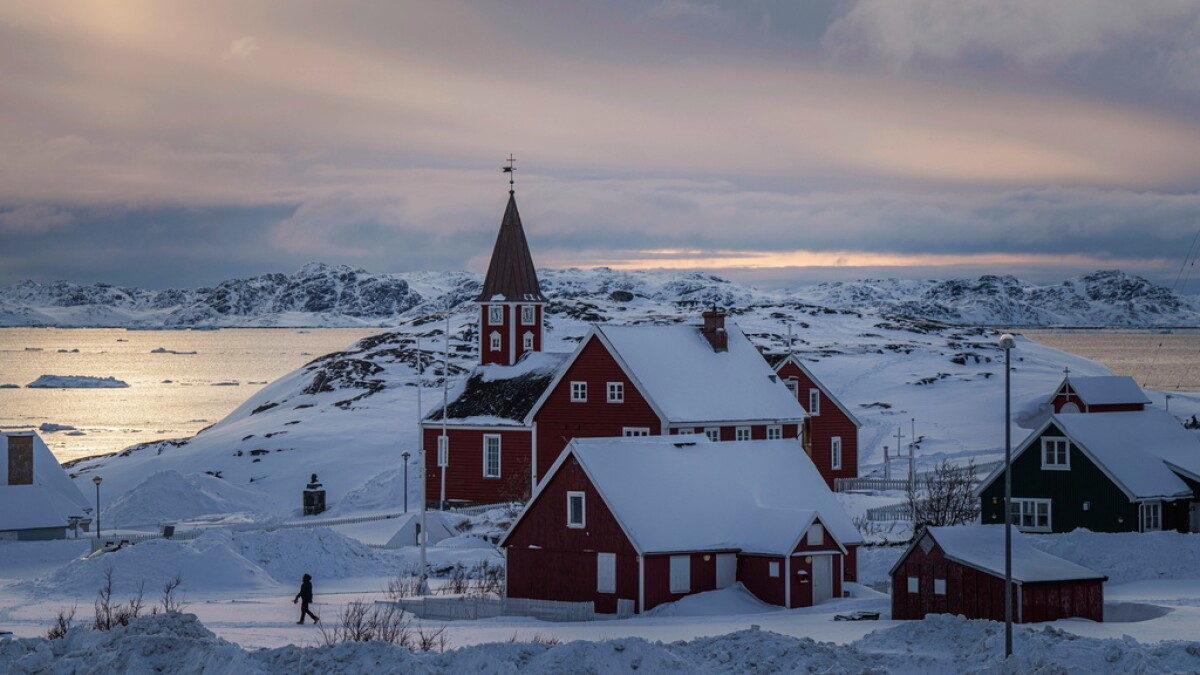
Greenland: Local Leadership Rejects External Control
Greenland’s own government, led by Prime Minister Jens‑Frederik Nielsen, has echoed Danish resolve. Nielsen and other Greenlandic leaders have repeatedly stated they were not consulted about purported deals between Trump and NATO leadership, and that only Greenland and Denmark have authority to make decisions about the territory’s future.
For Nielsen, sovereignty is not just a political stance — it’s a “red line” rooted in democratic self‑determination. Even when U.S. and Danish officials discuss defense cooperation, Greenlandic leaders emphasize that such talks must respect local autonomy and international law.
Public Reaction: Protests and Grassroots Opposition
Public sentiment in Greenland and Denmark has been passionate and unequivocal: Greenland is not for sale. In the weeks following Trump’s statements, thousands of Greenlanders marched in Nuuk, the capital, carrying signs such as “Greenland is not for sale,” and denouncing any suggestion that their land could be transferred to another nation.
These protests weren’t limited to political elites — they included citizens of all ages and extended to solidarity marches in Denmark and Canada’s Inuit‑governed Nunavut. Protesters underscored that the issue isn’t simply about economics or strategic access, but about sovereignty, cultural identity, and democratic rights.
European Union and NATO: Coordinated Defense of Sovereignty
EU Response: Supporting Territorial Integrity
European Union leaders, including European Commission President Ursula von der Leyen, framed Greenland’s sovereignty as a core principle of international order. At the World Economic Forum in Davos, von der Leyen affirmed that EU support for Denmark and Greenland’s sovereignty was “non‑negotiable”, even as Europe sought greater cooperation on Arctic security.
In response to Trump’s rhetoric — including threats of tariffs against European countries opposing U.S. assertiveness — the EU has prepared a package of measures to bolster Arctic security and economic development in Greenland, signaling a willingness to invest in local infrastructure and defense capabilities rather than cede influence to the United States.
NATO’s Role: Security, Not Sovereignty Talks
Although NATO was drawn into the discussions, with Secretary‑General Mark Rutte engaging Trump in talks, NATO officials clarified that sovereignty was not part of their negotiations. Rutte emphasized that discussions focused on Arctic security cooperation, such as defense against Russian or Chinese influence, and did not include any proposal to change Greenland’s status.
NATO spokespeople reiterated that the alliance’s mandate does not allow negotiation of territorial sovereignty on behalf of a member state. Instead, NATO’s involvement aims to enhance collective defense in the Arctic, building on longstanding agreements like the 1951 treaty that gives the U.S. military access to bases in Greenland with Denmark’s consent.
Public Opinion Inside Greenland: Identity, Autonomy, and Priorities
Beyond demonstrations, Greenland’s public discourse reflects deep concerns about autonomy and identity. Many Greenlanders see Trump’s proposals — even if framed in terms of security — as threatening and dismissive of their right to self‑determination. Analysts have noted that this controversy has energized local debates about future governance, including long‑standing discussions about possible full independence from Denmark.
While Greenland’s future relationship with Denmark and external powers remains complex, there is widespread agreement locally that Greenlandic people themselves should decide their own political fate — not external leaders using geopolitical strategy as leverage.
Wider Regional and Security Concerns
The controversy over sovereignty has also brought to the forefront broader concerns about Arctic security and great‑power competition. Both Greenland and Denmark support enhanced defense cooperation through NATO, especially to counter potential Russian or Chinese influence. But this cooperation is viewed as compatible with sovereignty — not a substitute for it.
Danish officials have highlighted that the United States can expand its presence in Greenland under existing agreements with consent from Denmark and Greenland, and that such cooperation can improve collective defense without implying political control.
Political Unity and Transatlantic Tensions
Ironically, Trump’s aggressive posturing has strengthened political unity between Denmark and Greenland, drawing both populations closer in defense of shared sovereignty. According to reports, the rhetoric has spurred national reflection on Danish‑Greenlandic ties and enhanced cooperation between their leaders in responding to external pressure.
At the same time, transatlantic relations between the U.S. and European allies have been strained. Trump’s rhetoric — including threats of tariffs to coerce European support — has been criticized as divisive and counterproductive, undermining trust and collaborative partnership on Arctic security.
Historical and Legal Foundations of Sovereignty
Understanding the strong reactions requires appreciation of Greenland’s historical and legal status. International law and centuries of history solidify Denmark’s sovereignty over Greenland, which emerged over centuries of governance and was upheld by international decisions such as the 1933 ruling affirming Danish control.
While Greenland has expanded its self‑government and autonomy over recent decades, full sovereignty remains a shared commitment between Denmark and Greenland rather than a negotiable commodity on the global stage.
International Opinion: A Test of Rules‑Based Order
Many global commentators see the Greenland controversy as a test of the post‑World War II rules‑based order. European countries, NATO allies, and international institutions have expressed support for upholding territorial integrity in line with longstanding international norms.
Critics of Trump’s approach argue that threats to sovereignty — even rhetorical — erode diplomatic trust and set dangerous precedents. Supporters of sovereignty emphasize that long‑standing alliances such as NATO depend on mutual respect and clear adherence to international law, not coercion.
What’s Next: Dialogue Over Domination
As of early 2026, much of the conversation has shifted from domination to dialogue. Denmark, Greenland, the U.S., and NATO are working through diplomatic channels to clarify positions and build cooperation frameworks that enhance Arctic security without infringing on sovereignty.
A working group involving Danish, Greenlandic, and U.S. officials has been established to explore options for cooperation, underscoring a shared interest in stability and defense in the Arctic region — but always with respect for territorial integrity as a baseline condition.
Conclusion: Sovereignty Takes Center Stage
The 2026 Greenland sovereignty debate isn’t simply an isolated dispute — it’s a defining moment in international relations that highlights the importance of territorial integrity, democratic self‑determination, and alliance respect. Leaders from Denmark, Greenland, the EU, and NATO have been clear: Greenland’s sovereignty is non‑negotiable and must remain at the forefront of any Arctic cooperation.
The global community’s reactions — from massive protests to diplomatic reaffirmations of sovereignty and territorial integrity — signal that modern geopolitics still values established international norms. As discussions about Arctic security and cooperation continue, one principle remains widely upheld: only the people and governments of Greenland and Denmark can determine their own future, not external powers.
About the Author


