

Iran’s Interim Council. On March 1, 2026, the Islamic Republic of Iran officially entered its most perilous chapter since the 1979 Revolution.
Following the confirmed death of Supreme Leader Ayatollah Ali Khamenei in a massive, coordinated joint strike by the United States and Israel on February 28, the nation is no longer governed by a single “Shadow of God.” Instead, power has been thrust into the hands of a three-man Interim Leadership Council.
As the dust settles over a smoldering Tehran, the world is asking: Can a system built on the absolute authority of one man survive a transition led by a committee?
This is the story of the Council’s first 72 hours and the internal fractures that could determine the fate of the Middle East.
1. The Triumvirate: Who is Running Iran?
Under Article 111 of the Iranian Constitution, when a Supreme Leader dies or is incapacitated, a temporary council must assume his duties until the Assembly of Experts—an 88-member body of senior clerics—appoints a permanent successor. As of March 3, 2026, the Council consists of:
- Masoud Pezeshkian (The President): A 71-year-old heart surgeon and reformist technocrat. Pezeshkian, who took office in 2024, is the civilian face of the regime, tasked with maintaining a semblance of government functionality and economic stability amid wartime conditions.
- Gholam-Hossein Mohseni-Ejei (The Judiciary Chief): An ultra-conservative hardliner and veteran of the security services. Ejei represents the “iron fist” of the regime, responsible for suppressing domestic dissent and ensuring that any celebration of Khamenei’s death is met with swift judicial retribution.
+2 - Ayatollah Alireza Arafi (The Clerical Member): The most recent addition to the Council. Arafi is a prominent member of the Guardian Council and the head of Iran’s seminary system. He provides the religious legitimacy required to keep the clerical establishment in Qom aligned with the transitional government.
2. A Regime Under Siege: The Immediate Challenges
The Interim Council did not inherit a peaceful nation. They inherited a state at war. Operation Epic Fury (U.S.) and Operation Roaring Lion (Israel) did not stop with the death of Khamenei.
Military Attrition
Reports from March 2 indicate that the Islamic Revolutionary Guard Corps (IRGC) has suffered devastating losses to its senior command. General Abdolrahim Mousavi, chief of the Armed Forces General Staff, and several top naval commanders were reportedly killed in the same 48-hour window as the Supreme Leader. The Council’s first task has been to maintain “command and control” over a military that is effectively decapitated.
The Domestic Powder Keg
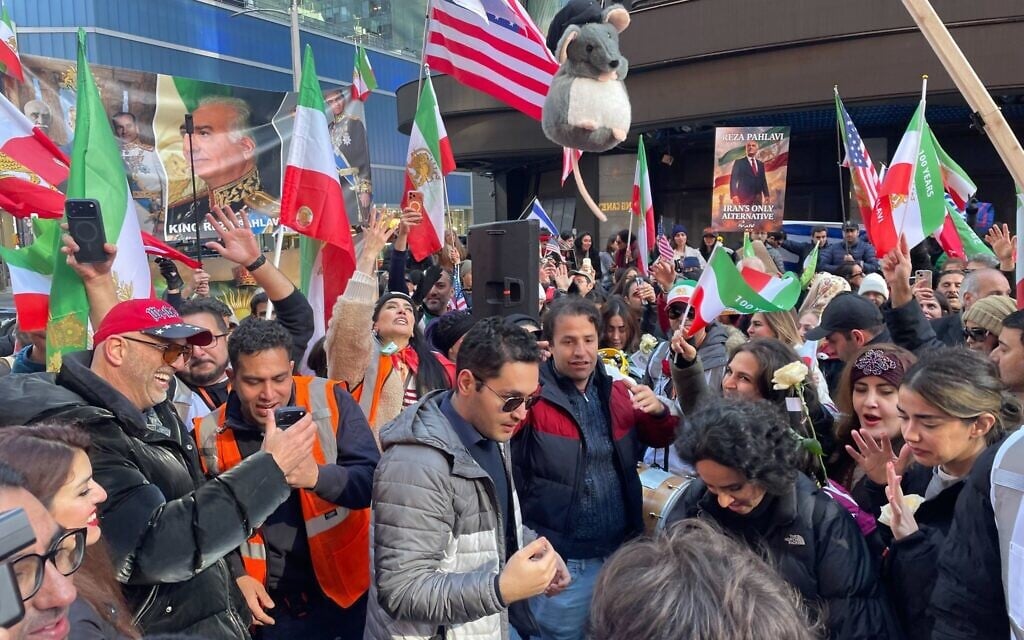
While state media broadcasts 40 days of mourning, social media leaks show a different reality. In neighborhoods like Sadeghieh in Tehran, thousands of Iranians have reportedly taken to the streets to celebrate the end of an era. The Council has responded by deploying the Basij militia in force, with reports of “killing nights” as security forces attempt to regain control of the capital.
3. The Shadow Figures: Larijani and the IRGC Junta
While the Interim Council holds the constitutional title, the true power struggle is happening in the corridors of the Supreme National Security Council.
Ali Larijani, a veteran pragmatist and former Speaker of Parliament, has emerged as a central figure in the transition. Some analysts suggest Larijani is acting as the “savior of Iran,” attempting to open back-channel negotiations with the West to prevent a total state collapse.
However, he faces stiff opposition from what some describe as an IRGC Military Junta. High-ranking Guard commanders, whose personal fortunes and survival are tied to the survival of the theocracy, are reportedly pushing for a “Securitized State.” If the Interim Council fails to project strength, the IRGC may dispense with the constitutional process altogether and declare a military state.
4. The Succession Duel: Mojtaba vs. The System
The Interim Council’s primary legal mandate is to oversee the selection of the third Supreme Leader. The 50-day constitutional window is ticking.
- Mojtaba Khamenei: The son of the late leader remains the most influential candidate, backed by the IRGC’s security apparatus. However, his selection would signal a move toward “hereditary rule,” a concept the 1979 Revolution was designed to destroy.
- Alireza Arafi: As a member of the Interim Council, Arafi’s profile has skyrocketed. He is viewed as the “institutionalist” candidate who could preserve the clerical nature of the state while offering a more modern, tech-savvy approach to governance.
5. Geopolitical Fallout: The End of the Proxy Era?
The Council’s ability to survive also depends on the “Axis of Resistance.” In early March, the IRGC claimed it struck 14 U.S. bases in a retaliatory operation known as “True Promise 4.” However, without the unifying religious authority of Khamenei, groups like Hezbollah and the Houthis are beginning to act as local actors rather than arms of a unified Iranian empire.
If the Interim Council cannot continue the flow of funds and orders, Iran’s regional “shield” may vanish, leaving the regime exposed to further direct strikes on its nuclear and energy infrastructure.
6. The Verdict: Can They Hold On?
The survival of the Islamic Republic in 2026 hinges on whether the Interim Council can bridge the gap between a restless, young population and a terrified, aging elite.
The Regime Survives If: Pezeshkian manages to stabilize the economy, Ejei prevents a general uprising, and the IRGC remains loyal to the clerical system. The Regime Fails If: The IRGC fractures, the “Interim” period becomes indefinite, or a second wave of strikes targets the Council members themselves.
As of March 3, 2026, the state is in a state of “suspended animation.” The Interim Council is the only thing standing between the Islamic Republic and a total revolutionary reset.
About the Author


