
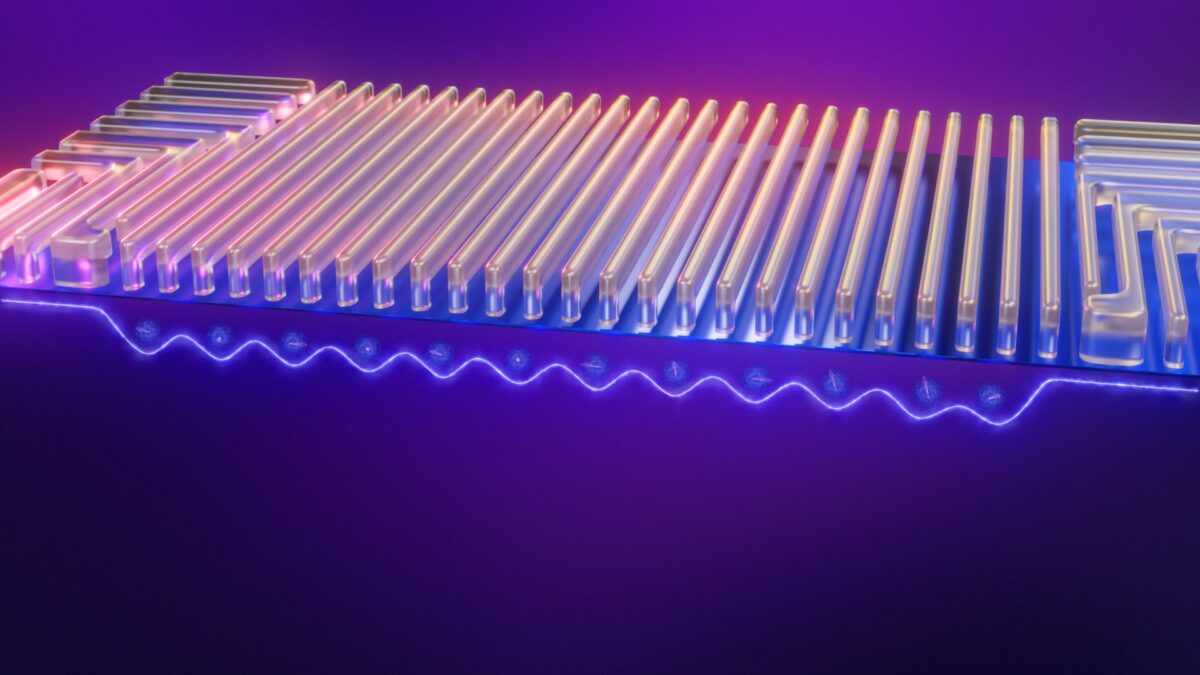
The Latest Advances in Qubit Technology You Can’t Miss. Quantum computing was once the stuff of theory and academic labs — but in 2026, it’s rapidly moving into practical territory thanks to groundbreaking advances in qubit technology.
Qubits are the fundamental building blocks of quantum computers, and improvements in their performance, coherence, reliability, and scalability are driving the entire field forward.
Whether you’re new to quantum computing or already familiar with the basics, this article highlights the most exciting recent breakthroughs in qubit technology — from longer‑lasting qubits and ultra‑large processors to error correction milestones and new architectures that could redefine the future of computing.
Why Qubit Advances Matter
Unlike classical bits (0s and 1s), qubits take advantage of quantum phenomena like superposition and entanglement — allowing quantum computers to process vast possibilities at once. But building practical qubits is incredibly difficult. They must maintain fragile quantum states long enough to perform computations, resist environmental noise, and scale up into large systems.
Recent breakthroughs address these very challenges, bringing us closer to fault‑tolerant quantum computing — where errors are controlled well enough to tackle real‑world problems in chemistry, optimization, cryptography, and beyond.
Let’s explore the biggest advances you need to know in 2026.
1. Superconducting Qubits with Record‑Long Coherence
One of the most celebrated recent advances came from researchers at Princeton University, who developed a superconducting qubit with coherence times exceeding 1 millisecond — roughly three times longer than the best prior lab records.
Why it Matters
Longer coherence means qubits can sustain quantum information longer before it decays due to environmental noise. This directly impacts a quantum computer’s performance and reliability — laying the groundwork for efficient error correction and larger multi‑qubit processors.
By using novel materials — especially tantalum on high‑purity silicon substrates — the Princeton team reduced energy loss and made qubits significantly more stable. Their design is compatible with existing superconducting architectures used by companies like Google and IBM, meaning these improvements could be adopted in current generation hardware.
In practical terms, swapping in these improved qubits could make a hundred‑qubit machine orders of magnitude more reliable, and the benefits grow exponentially with scale.
2. Error Suppression and Fidelity Breakthroughs
Quantum operations are notoriously error‑prone, and improving gate fidelity — how accurately quantum gates perform operations — is critical for useful computation. In 2025, industry leader IonQ announced a 99.99% gate fidelity using trapped‑ion qubits — a milestone often described as “four nines” precision.
Why High Fidelity Matters
Every quantum computation involves many individual gates (operations). Low‑error gates significantly reduce the overhead needed for quantum error correction and dramatically improve computational reliability.
To put it in perspective: improving fidelity from 99.9% to 99.99% doesn’t sound big, but in quantum computing, it can multiply performance by billions — a huge leap toward practical systems.
As fidelity climbs reliably above 99.99% and toward 99.999%, quantum computers become capable of solving more complex problems without being overwhelmed by errors.
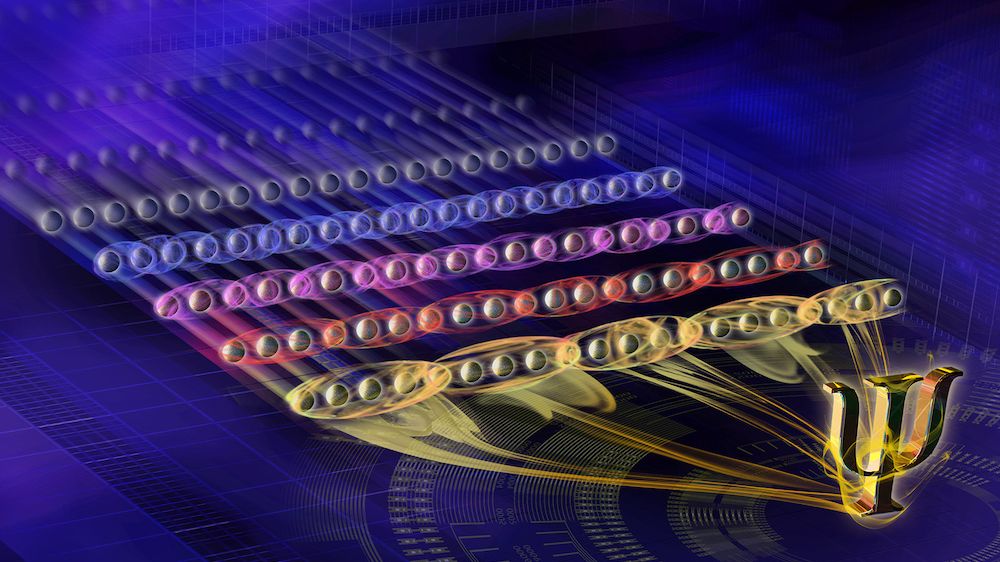
3. Error Correction Gets Real
For decades, quantum error correction was a theoretical requirement — possible but extremely difficult to implement. In the past few years, multiple platforms have begun demonstrating logical qubits with error suppression that show real progress toward fault‑tolerant computing.
What’s a Logical Qubit?
A logical qubit is a representation of a qubit encoded across many physical qubits, designed to resist errors while computations are performed. Multiple recent platforms have made progress:
- Google demonstrated a logical qubit with high‑fidelity operation using superconducting qubits.
- AWS & Atom Computing encoded logical information with hybrid techniques using fewer physical qubits.
- QuEra produced neutral atom systems implementing surface code logic.
- Quantinuum successfully performed fault‑tolerant teleportation on logical states.
This is a turning point — error correction is no longer purely theoretical. It’s starting to feature in advanced experimental systems, paving the way for scalable and practical quantum machines.
4. Ultra‑Large Qubit Architectures and Wiring Innovations
One of the biggest challenges in building powerful quantum computers is scaling up qubits without overwhelming control wiring and noise.
A recent breakthrough from QuantWare introduced a 3D wiring architecture that could support up to 10,000 qubits, addressing a longstanding bottleneck in chip design.
Why Advanced Wiring Is Critical
Traditional quantum chips sit on planar (2D) wiring. This limits how many qubits can be connected without excessive cross‑talk and signal loss. By using vertical, high‑density lines and modular “chiplet” technologies, researchers can dramatically increase qubit counts while preserving performance.
This type of innovation doesn’t just increase qubit quantity — it lays the engineering foundation to integrate massive quantum processors without compromising fidelity or reliability.
5. Neutral Atom and Other Alternative Qubit Platforms
While superconducting and trapped‑ion qubits are dominant today, alternative qubit technologies are advancing rapidly and showing unique strengths.
Neutral Atom Qubits
Neutral atom architectures use atoms held in place by laser fields — and these systems can scale up densely. Companies like Infleqtion and Pasqal are pushing neutral atom systems into the spotlight, demonstrating industrial traction, quantum cloud access, and early error‑corrected operations.
Neutral atoms are especially promising due to their potential for universal connectivity (all‑to‑all qubit interactions) and relatively simple cooling requirements compared to ions.
Photonic Qubits
Photonic qubits — using particles of light — are also undergoing major investments. For example, PsiQuantum broke ground on a Chicago quantum site backed by $1 billion to develop photonic quantum chips, with the long‑term aim of building million‑qubit fault‑tolerant systems.
Photonic systems have the advantage of room‑temperature operation and compatibility with fiber‑optic telecom infrastructure — promising for quantum networking and distributed quantum computing.
6. Hardware Roadmaps and Real‑World Applications
Major industry players are releasing ambitious quantum hardware roadmaps that signal where qubit technology is headed:
Google’s Willow processor (105 superconducting qubits) achieved error correction scaling known as below threshold — where adding more qubits reduces, rather than increases, error rates — a major indicator of practical scalability.
IBM
IBM continues its systematic build‑out with a new Nighthawk 120‑qubit chip featuring improved qubit connectivity and performance, increasing the complexity of circuits that researchers can explore.
IBM’s long‑term roadmap targets fault‑tolerant “Starling” systems with hundreds of logical qubits by 2029, as well as large quantum‑classical hybrid supercomputers in the years beyond.
Together, these industry roadmaps suggest that by the end of this decade, qubit systems may not only be larger but genuinely capable of applications that push beyond classical limits.
7. Integration of Control Electronics at Cryogenic Temperatures
Quantum systems operate at milli‑kelvin temperatures — but traditional control electronics often operate far away from the qubits themselves, introducing noise and latency.
Researchers at the University of Sydney developed a cryogenic CMOS control chip that functions at near‑absolute‑zero temperatures and integrates closely with qubit arrays, enabling millions of quantum gates without performance loss.
This is a big deal: bringing classical control electronics closer to the quantum hardware mitigates noise and thermal disturbances, which are two primary killers of quantum coherence.
8. Industry Adoption and Global Expansion
Quantum computing isn’t just happening in labs; it’s becoming a global technology sector. Governments and research consortia are investing heavily in qubit research and infrastructure.
For example:
- Various states and nations are building quantum ecosystems and facilities that house advanced quantum processors and support research collaboration.
- Public‑private partnerships and conferences are proliferating, spreading knowledge, talent, and commercialization strategies globally.
These developments help accelerate qubit innovation — by training researchers, creating supply chains, and supporting start‑ups that push technology forward.
9. Toward Fault‑Tolerant, Practical Quantum Computers
All the advances above — better qubits, longer coherence, higher fidelity, error correction, inventive hardware architectures, and integrated electronics — point toward one long‑term goal: fault‑tolerant quantum computing.
Fault tolerance means a system can detect and correct errors as they occur, maintaining accurate calculations over long operations — a prerequisite for solving real‑world problems outside of small benchmark tasks.
We are not quite there yet in 2026, but we are closer than ever. Multiple platforms now demonstrate logical qubits, error mitigation techniques, and error rates low enough to consider expanded calculations in chemistry, materials science, and optimization.
10. The Future of Qubit Technology
Looking ahead, qubit technology is still evolving on many fronts:
- Materials science continues to identify metals, substrates, and fabrication techniques that improve quantum coherence and reduce noise.
- Hybrid quantum architectures may combine the best features of superconducting, photonic, and atom‑based systems.
- Software and algorithms are adapting to new hardware realities, helping extract practical results even from noisy intermediate‑scale quantum (NISQ) devices.
Quantum computing is no longer a distant dream — it’s a rapidly developing technological ecosystem with real investments, real milestones, and real applications emerging in the near future.
Final Thoughts: Why These Advances Matter
Every breakthrough in qubit technology represents a step closer to usable quantum computers — machines capable of solving problems that are currently infeasible for classical computers.
From record‑setting coherence times and unprecedented gate fidelities to practical error correction and massive scaling architectures, the progress being made in 2025–2026 is historic. These advances are laying the foundation for a future where quantum computers move from pristine research demos to practical tools for science, industry, and global challenges.
If you’re passionate about the future of computing — whether as a student, researcher, investor, or tech enthusiast — the qubit breakthroughs happening now are the developments to watch.
About the Author


